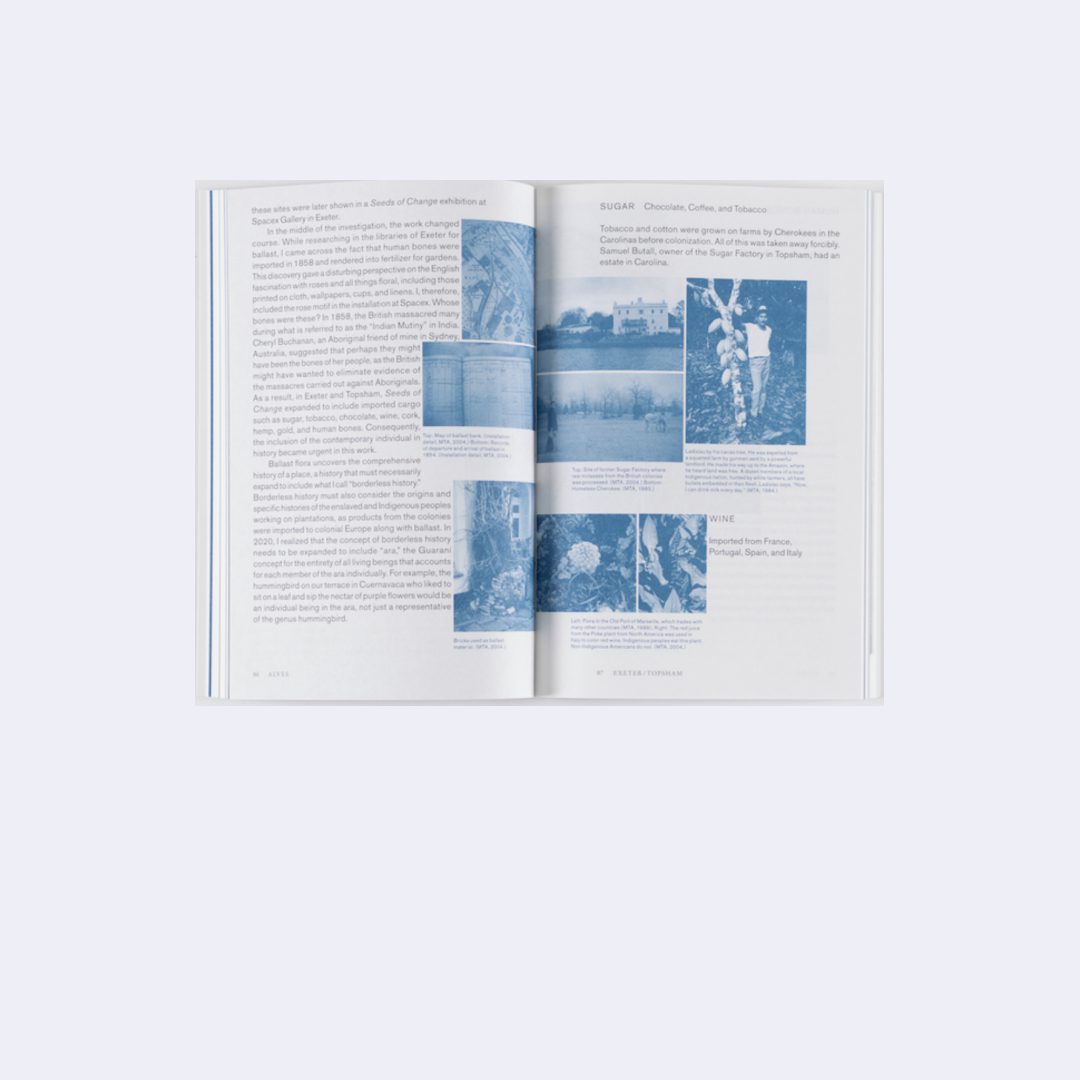
In an era of climate change, extractivist economies, and forced mobility, who and what belongs? Throughout her prolific career, Brazilian artistMaria Thereza Alveshas focused precisely on this question. Perhaps her most iconic, generative, and expansive work isSeeds of Change, a twenty-year investigation into the hidden history of ballast flora—displaced plant seeds found in the soil used to balance shipping vessels during the colonial period.
The project examines the influx and significance of imported plants, materializing at port cities across several continents: Marseille, Reposaari, Liverpool, Exeter and Topsham, Dunkerque, Bristol, Antwerp, and most recently New York, where it was awarded the Jane Lombard Prize for Art and Social Justice by the Vera List Center for Art and Politics at The New School. In each city,Seeds of Changehas revealed the entangled relationship between “alien” species and the colonial maritime trade of goods and enslaved peoples, contrasting their seemingly innocuous beauty with the violent history associated with their arrival. By focusing on ballast flora, Alves invites us to de-border postcolonial historical narratives and consider a “borderless history.”
The first monograph of Alves’s historic project,Seeds of Changeis edited byCarin KuoniandWilma Lukatschand features essays by the artist as well asKatayoun Chamany,Seth Denizen,Jean Fisher,Yrjö Haila,Richard William Hill,Heli M. Jutila,J. Kēhaulani Kauanui,Lara Khaldi,Tomaž Mastnak,Marisa Prefer, andRadhika Subramaniam.
€29,99
Choosing a selection results in a full page refresh.
Press the space key then arrow keys to make a selection.